There are four main home loans, conventional, FHA, VA and USDA, and four questions pick the one to ask a lender about first. Did you serve? Is the address on USDA's map with your household income under the limit? Will this be the home you live in? And how strong is your credit and how much can you put down? On a $400,000 house, the minimum down payment is $12,000 on conventional and $14,000 on FHA. VA and USDA don't require any down payment at all, though you still pay closing costs. If you qualify for more than one, ask the lender to quote each.
The full video runs through every step. This page has the same figures written out.
Why are there four different home loans?
Picking the wrong loan can cost you extra cash up front or mortgage insurance you didn't need. Every mortgage has a silent partner standing behind it in case you stop paying, and that partner gets to write the loan's rules.
I'll use one example the whole way through, a $400,000 house, so you can compare what each loan needs from you up front and every month.
| Loan | Down payment | Who is behind it |
|---|---|---|
| Conventional | 3% ($12,000) for a first-time buyer, generally 5% otherwise | No government agency, private mortgage insurance |
| FHA | 3.5% ($14,000) with a 580 score or higher, 10% from 500 to 579 | HUD |
| VA | None | The government covers part of the loss |
| USDA | None | The Department of Agriculture |
What is a conventional loan and who is it for?
A conventional loan just means no government agency is backing it. Today, the minimum down payment is 3% if you're a first-time buyer, and if you're buying with someone else, only one of you has to be. First time has a looser meaning than you'd think, because if you haven't owned a home in the last 3 years, you count. Otherwise, a standard conventional loan generally starts at 5% down.
On our $400,000 house, 1% is $4,000, which makes 3% $12,000. That's a lot of money for most households, and it's still a long way from the 20% down you might think you need. My down payment guide goes through what each amount of cash gets you.
You'll pay private mortgage insurance every month, but it doesn't have to last forever. You can ask to have it removed once your balance gets down to 80% of the home's original value, and in general it comes off on its own at 78%.
As for credit, in November 2025 Fannie Mae dropped its hard 620 minimum score for loans that go through its automated system. A 620 still applies when a loan is underwritten by hand, and lenders can set their own minimum, so don't read that as any score works.
Conventional is also the only one of the four you can use for a second home or a rental. In most of the country it covers loans up to $832,750 this year. So conventional fits best when your credit is strong, you want mortgage insurance that can come off, or the home isn't going to be where you live.
Where does private mortgage insurance come from?
For a long time, if you had less than 20% down, the government programs were where you went. In 1957, a real estate lawyer in Milwaukee named Max Karl got fed up with how slow and paperwork-heavy the government-backed loans were. He raised $250,000 from investors and started a private company that would cover part of the bank's losses if a buyer with a small down payment stopped paying.
That's where private mortgage insurance comes from, and it's the silent partner that lets a conventional loan work with less than 20% down.
Who is an FHA loan for?
What if your credit took a hit a couple of years ago, or your debts run on the high side? That's the exact buyer FHA was created for, and its story starts in the Great Depression. Before 1934, a bank would usually only lend about half of what a house was worth, and you had 3 to 5 years to pay it back with a huge payment due at the end. When the Depression hit, a lot of families couldn't make that last payment. So in 1934, Congress created the FHA to insure home loans, so banks would lend more of the price for a lot longer.
Today it's run by HUD, the Department of Housing and Urban Development, which is the federal agency for housing. It's still the most forgiving of the four about credit and debts.
With a credit score of 580 or higher, FHA's minimum down payment is 3.5%, which is $14,000 on a $400,000 house. We already know 3% is $12,000, and another half a percent is $2,000 more. With a score between 500 and 579, it's 10% down.
When an FHA loan is underwritten by hand, HUD's standard is that your house payment stays under 31% of your income before taxes, and all of your debts together stay under 43%. FHA's automated system can approve loans above those.
How does FHA mortgage insurance work?
HUD is the silent partner here, so it charges for that insurance in two ways. The first is an upfront premium of 1.75% of the loan. You'd be borrowing $400,000 minus your $14,000 down, so $386,000, and 1.75% of that is about $6,750, which usually gets added onto the loan.
The second is a yearly premium, which is 0.55% of the loan for most people putting down the minimum, split into your monthly payments.
The rule that matters most is how long that yearly premium lasts. With less than 10% down, it stays for the life of the loan, and with 10% down or more, it lasts only 11 years. The usual way to get out of it is to refinance later, and that only works if rates are good at the time and you owe a lot less than the house is worth.
What else should you know about FHA before applying?
You also have to live in the home, moving in within 60 days of closing and staying at least a year. And FHA has county loan limits, which this year run from $541,287 in lower cost areas up to $1,249,125 in the most expensive ones.
So FHA is the one to look at when your score or your debts would make a conventional loan hard to get. If you qualify for both, ask the lender to quote both, because which one costs less depends mostly on your credit score and how much money you put down. My FHA vs conventional guide runs that comparison on one house at three different credit scores.
What is a VA loan and who qualifies?
The next two loans don't require any down payment, though you still have to pay closing costs. The first one goes back to a bill that Harry Colmery wrote by hand in a hotel room in Washington in the winter of 1943, for the soldiers coming home. Part of it was a home loan. The government isn't going to lend the veterans the money. It promises the bank that if a veteran stops paying, the government covers part of the loss, half a loan up to $2,000 back then.
In other words, the government cosigns, a lot like a cosigner on your first apartment. The landlord says yes because someone else promised to cover the rent, but that person gets to set the conditions.
If you're serving now, you generally qualify after 90 continuous days of active duty. Veterans, National Guard members and reservists have their own service requirements, and for the Guard and Reserve it's often 6 years of service. Some surviving spouses qualify too. You prove it with a certificate of eligibility, which you can request from the VA before you even start shopping.
What does a VA loan cost?
The benefits are big. There's no down payment as long as the price isn't higher than the appraised value, and there's no monthly mortgage insurance at all. If you still have your full VA loan benefit, which the VA calls full entitlement, the VA doesn't set a loan limit.
But a lot of people think VA loans are free, and that's not quite right. There's a one-time funding fee, and on your first VA loan with less than 5% down, it's 2.15% of the loan. On our $400,000 house with no down payment, 1% of the loan is $4,000, so 2% is $8,000, and that last 0.15% is another $600. So the fee is $8,600. Most people roll it into the loan, so you'd owe $408,600.
On later VA loans, the fee is 3.3% with less than 5% down, and putting 5% or 10% down lowers it either way. If you receive VA disability compensation, you don't pay the fee at all, and neither do active duty Purple Heart recipients or surviving spouses receiving dependency and indemnity compensation.
The VA itself doesn't set a minimum credit score, but lenders set their own. VA also looks at residual income, which is the money you have left over each month after your house payment and other bills, with minimums based on your family size and where you live. The loan has to be for the home you live in. So if you're eligible, VA is the first loan you should ask a lender to quote.
How did the VA home loan nearly not pass?
Colmery's bill almost didn't make it, because it came down to a tied vote. It's June of 1944, the same week as D-Day, and the House members working out the final bill are split three to three. The tiebreaker is a congressman named John Gibson, and he's for the bill. He'd even left his vote with another congressman so it could be cast while he was gone, but that congressman was against the bill and refused to cast it.
So now they have to get Gibson there in person, and he's at home in Douglas, Georgia, with no idea the bill is in trouble. Police start stopping cars on the highway, and radio stations put out calls asking anyone who knows where he is. They finally find him, and that night they drive him through the rain at up to 90 miles an hour to the airport in Jacksonville, where an airline is holding a plane for him.
He makes it to Washington the next morning, the committee votes, and the bill passes 14 to nothing. Roosevelt signs it on June 22nd, 1944, and the VA home loan has been around ever since.
What is a USDA loan and do you have to buy a farm?
The last loan is the one people rule themselves out of because of its name. No, you don't have to buy a farm or work on one. USDA is built for moderate-income households buying in areas the Department of Agriculture counts as rural. Whether a house counts depends on its address, and the only reliable way to know is to type it into USDA's eligibility map. A lot of small towns qualify, so check before you assume you're too close to a city.
There's an income rule, and this is the one that trips people up. Your household's income has to be at or below 115% of the median income for that area, and USDA counts the income of every adult living in the home, not just the people on the loan. So if another adult with a job lives with you, their income counts toward that limit.
If you qualify, there's no down payment. USDA charges an upfront fee of 1%, which on our $400,000 house is $4,000, and you can roll it into the loan. There's also a yearly fee of 0.35% that lasts for the life of the loan. It's a 30-year fixed loan only, and it has to be the home you live in.
The program is also meant for buyers who can't easily get a loan somewhere else, so if you clearly qualify for a conventional loan, a lender may point you there instead. So USDA fits when the address is on the map and your whole household's income is under the limit.
| Loan | Upfront fee | Yearly insurance |
|---|---|---|
| Conventional | None | Private mortgage insurance, comes off on its own at 78% |
| FHA | About $6,750 (1.75%) | 0.55% a year, for the life of the loan with less than 10% down |
| VA | $8,600 (2.15%), so you'd owe $408,600 | None |
| USDA | $4,000 (1%) | 0.35% a year, for the life of the loan |
How do you pick which loan to ask a lender about first?
Ask yourself four questions in this order.
- Did you serve, or are you the surviving spouse of someone who did? If you did, start with the VA and request your certificate of eligibility.
- Is the area you're shopping on USDA's map, and is your whole household income under the limit? If it is, USDA goes on your list.
- Will this be the home you live in? If it's a second home or rental, conventional is the only one of these four that works.
- What is your credit score and how much can you put down? Stronger credit and a bigger down payment usually points to conventional, and a lower score or higher debt usually puts FHA in the mix.
What if you fit more than one loan?
If you fit more than one, that's actually great news. Ask the lender to quote each loan you qualify for and compare the official Loan Estimate forms side by side.
Harry Colmery wrote his bill for the soldiers coming home, and John Gibson rode through the night to make sure it passed. More than 80 years later, it's still the loan built for the people who served.
Common questions about first-time buyer loans
What is the best home loan for first-time buyers?
There are four main loans, conventional, FHA, VA and USDA, and the best one depends on your situation. If you served, start with VA. If the address is on USDA's map and your household income is under the limit, USDA goes on your list. Otherwise it usually comes down to your credit score and how much you can put down, with strong credit pointing to conventional and a lower score or higher debts pointing to FHA.
Which first-time buyer loans have no down payment?
VA and USDA. You still pay closing costs. VA has no down payment as long as the price isn't higher than the appraised value, and USDA has none if your household qualifies.
What is the minimum down payment on each loan?
Conventional is 3% for a first-time buyer, and a standard conventional loan generally starts at 5%. FHA is 3.5% with a credit score of 580 or higher and 10% with a score between 500 and 579. VA and USDA have no down payment. On a $400,000 house that is $12,000 on conventional and $14,000 on FHA.
Do I count as a first-time buyer if I owned a home before?
Possibly. First time has a looser meaning than you'd think, because if you haven't owned a home in the last 3 years, you count. If you're buying with someone else, only one of you has to be a first-time buyer.
Do I need a 620 credit score to get a conventional loan?
In November 2025, Fannie Mae dropped its hard 620 minimum score for loans that go through its automated system. A 620 still applies when a loan is underwritten by hand, and lenders can set their own minimum, so don't read that as any score works.
Does a USDA loan mean I have to buy a farm?
No. USDA is built for moderate-income households buying in areas the Department of Agriculture counts as rural, and a lot of small towns qualify. Whether a house counts depends on its address, so type it into USDA's eligibility map.
Are VA loans free?
A lot of people think so, and that's not quite right. There's a one-time funding fee, and on your first VA loan with less than 5% down it's 2.15% of the loan. If you receive VA disability compensation you don't pay it, and neither do active duty Purple Heart recipients or surviving spouses receiving dependency and indemnity compensation.
What if I qualify for more than one loan?
That is good news. Ask the lender to quote each loan you qualify for and compare the official Loan Estimate forms side by side.
Sources
The figures in this guide come from the video above, which uses these sources.
- Fannie Mae Selling Guide
- HUD Handbook 4000.1
- VA Lenders Handbook
- USDA HB-1-3555
- Freddie Mac PMMS
More guides
- How much down payment do you need for a house? Cash needed at 3%, 5% and 20% down, and 10 years of math on buying now or waiting for 20%.
- FHA vs conventional: which loan costs less? One $350,000 house through both loans at 760, 700 and 640 credit scores.
- How do mortgage rates work, and how do you get a lower one? Where a mortgage rate comes from, why the Fed doesn't set it, and six moves for a lower one.
- How much mortgage can I afford? What a lender approves at $25 an hour, $75,000 and $100,000, and the 28% number.
- Renting vs buying a home: who has more money after 20 years? A July 2006 buyer against three renters, and a test you can use on any listing.
- How much house can I afford on a $75K salary? The lender's max of about $300,000 against a comfortable $190,000, with debts, three cities and the cash to close.
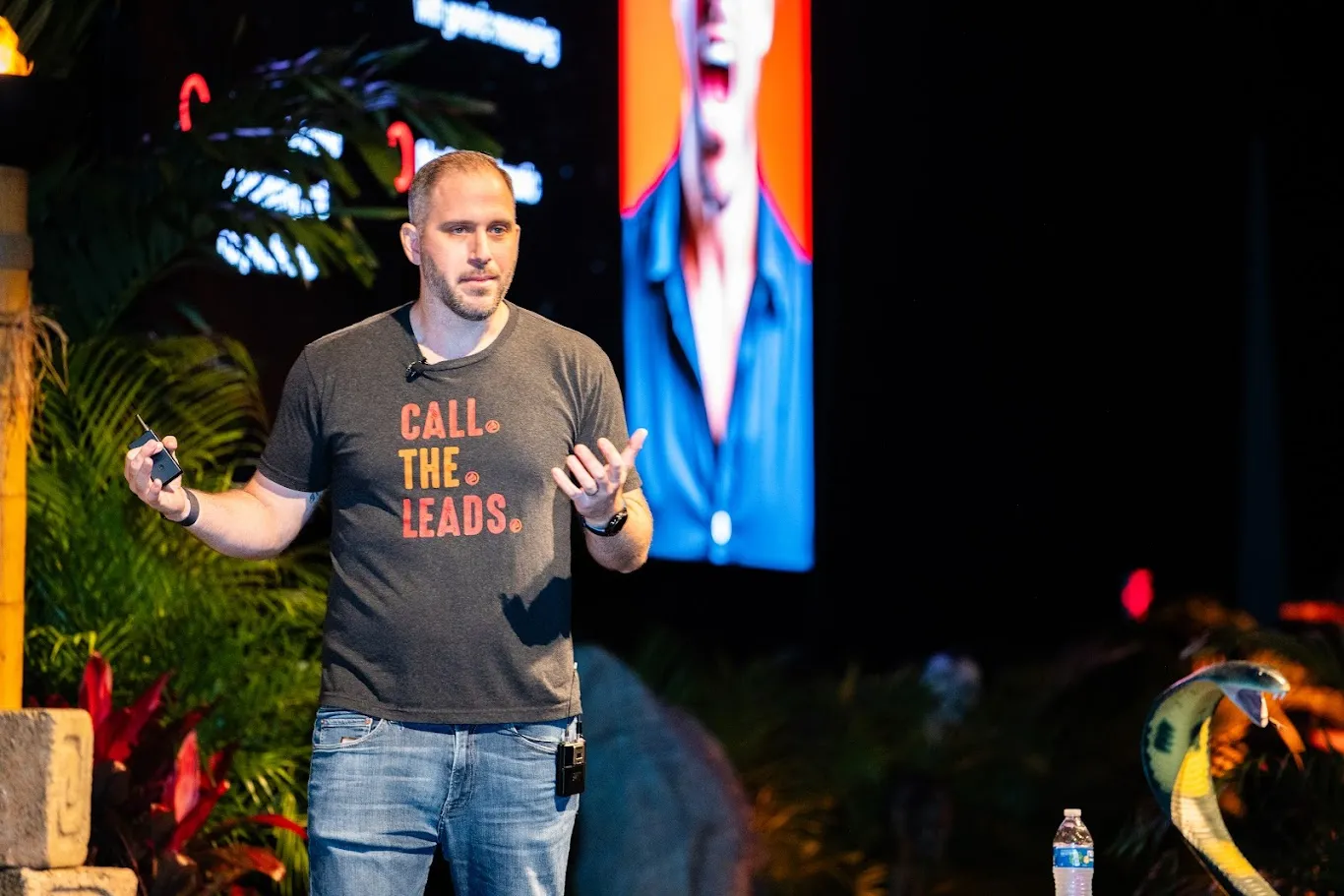
Luke Shankula is a mortgage educator in San Diego and the host of Mortgages Made Simple on YouTube, Instagram and TikTok. He co-founded Cadre Mortgage Group with Rebecca Richardson and Marissa Dropulic. He has held his mortgage license since 2017 (NMLS #1446932). More about Luke