Closing costs usually run 2% to 5% of the price. In my example with a $290,000 house, I used $8,700 for closing costs on top of an $8,700 down payment, so that household needed $17,400 in cash. You can lower that by asking the seller to pay part of your closing costs.
This video follows one household through a 90-day purchase. The cash they need starts at 1:35 and their final costs start at 7:13. The fee rules and the California facts on this page come from the official sources listed at the bottom.
How much are closing costs on a house?
Closing costs are the fees to finish the purchase, and they usually run 2% to 5% of the price. The Consumer Financial Protection Bureau, or CFPB, gives the same range. They come on top of the down payment.
In my down payment video I said 3%, which is $8,400 on a $280,000 house. Here are three houses from my videos.
| House and loan | Down payment | Closing costs | Cash needed |
|---|---|---|---|
| $280,000, conventional | $14,000 (5%) | $8,400 | $22,400 |
| $290,000, conventional | $8,700 (3%) | $8,700 | $17,400 |
| $320,000, FHA | 3.5% | About $9,600 | $20,800 |
The $280,000 house is the one in my down payment guide. For most households, that $22,400 is a couple of years of real saving.
What is cash to close?
Before you shop, ask a lender for your full cash-to-close number, which adds the closing costs to the down payment. On a Loan Estimate, the box called Costs at Closing ends with your estimated cash to close, and that number includes your down payment.
In the video above, one household wants a $290,000 house, and they've saved $24,000. They're first-time buyers, so they can put 3% of the price down, which is $8,700. That's on a conventional loan, the regular kind with no government program behind it. Closing costs are the fees to finish the purchase, and say those are another $8,700. That's $17,400 in cash.
Some of that cash leaves early. Within a few days of the seller saying yes, they pay earnest money, which is a deposit that shows the seller they're serious. It's often 1% to 3% of the price, and it counts toward the $17,400. Then comes the home inspection, where you pay someone to find what's wrong with the house, about $400 on top of that.
What fees are in closing costs?
Closing costs are the fees I pay the lender and the other companies that finish the purchase. I haven't walked through every fee in a video, so this list comes from the CFPB. The CFPB says there are several different kinds of costs you must pay at closing.
| Kind of cost | What the CFPB lists |
|---|---|
| Lender charges | Origination charges and points |
| Third-party costs | Appraisals and title insurance |
| Prepaid expenses and deposits | First deposits into an escrow account |
Points are a fee you pay the lender up front to get a lower interest rate. Each point costs 1% of your loan. You pay that at closing, which is the day you sign the final papers and get the keys, and you pay it on top of your down payment. Points can be worth it if you're sure you'll keep the loan long enough. My guide to how mortgage rates work covers other ways to get a lower rate.
Two of the other companies are an appraiser checking what the house is worth and a title company checking who owns it. The title policy your lender requires pays the lender if someone else claims the house. The one that pays you is the owner's policy, and you decide on it before you close. So when title insurance shows up in your closing costs, ask about the owner's policy.
FHA adds one more cost. Every FHA loan has mortgage insurance, which is a fee that covers the lender if you stop paying, and you pay it in 2 parts. The first part is 1.75% of the loan, and it usually gets added to the loan so it doesn't come out of your pocket at closing. My FHA loan requirements guide covers the second part.
Who pays closing costs, the buyer or the seller?
You can ask the seller to pay part of your closing costs when you make your offer. It's called a seller credit, where the seller pays your closing costs for you. Every dollar of that is a dollar you don't have to bring on closing day.
But there are two limits on how much of it you can use. The first limit is your actual closing costs. A seller credit works like a gift card that only works on your closing costs, and if the card is bigger than the bill, you don't get the change. The second limit depends on your loan and how much you put down.
| Loan | Limit |
|---|---|
| Conventional, less than 10% down | 3% of the price |
| Conventional, 10% or more down | 6% of the price |
| Conventional, 25% or more down | 9% of the price |
| FHA | 6% of the price |
VA loans have their own limits. My guides to conventional loans and the best home loan for first-time buyers cover how the loans differ.
Here is how the first limit works on a real offer. Say you're buying a $320,000 house with an FHA loan. You need $20,800 in cash for the down payment and the closing costs. Now say the roof has about three years left, a roofer quotes $15,000 to replace it, and the seller offers you that $15,000.
A credit can't be bigger than your actual closing costs, which here are about $9,600. So you take $9,600 as a credit and the other $5,400 off the price. The seller's still giving up the same $15,000. Your down payment barely moves, and your closing costs are covered. On this house, it drops the cash you need at closing from $20,800 to about $11,000.
The wording can cost you cash. On FHA, if your contract calls that money a repair allowance, your mortgage lender takes it off the price. So have the credit written toward your closing costs, and have your mortgage lender read that line before you sign. The rest of that example is in my guide to red flags when buying a house.
Builders run into the same limit. On my $395,000 new house with 5% down, 3% is $11,850. So if the builder advertises $20,000 in incentives, only about $11,850 of it can go toward your closing costs, and the rest only helps you if it comes off the price. My guide to buying a new construction home has the question to ask the builder.
So before you write any offer, get two figures from your mortgage lender, your estimated closing costs and the most a seller can pay on your loan.
Can closing costs change before closing day?
Once you formally apply, the lender has to give you a Loan Estimate within three business days. It's a standard form that shows your rate, your monthly payment and your cash to close. Until you've gotten that form and told the lender to go ahead, the only fee a lender is allowed to charge you is for pulling your credit report.
Federal rules generally don't let a lender raise its own fees after they're on this form. Other costs have more room to move. The CFPB sorts them into three groups.
| How much it can rise | Costs in that group |
|---|---|
| Cannot increase at all | The lender's fees, required services you couldn't shop for, transfer taxes |
| Up to 10% in total | Recording fees, certain required services |
| Any amount | Prepaid interest, property insurance premiums, first escrow deposits, certain third-party fees |
Three business days before closing, your final costs have to be in your hands by law. If you close on a Friday, the form with those costs, called the Closing Disclosure, has to reach you by Tuesday. That gives you time to check those costs and get your money ready.
Put it right next to that Loan Estimate and check the rate, the monthly payment and the cash to close. If something changed, ask why before closing day, while there's still time to fix it.
What are closing costs like in California and San Diego County?
My videos don't cover California's local charges, so this part comes from official California sources.
The first one is the documentary transfer tax. The San Diego County Recorder lists it at a rate of $0.55 per $500 or fractional part thereof, figured excluding any existing liens or encumbrances. The CFPB puts transfer taxes in the group that cannot increase at all after your Loan Estimate.
The second one is who pays for title and escrow. California's Department of Insurance says that in Southern California, the seller customarily pays the premium for title insurance. It also says that in almost every county, the buyer pays the lender's policy premium, and that local custom decides who pays because no law sets it.
California's Department of Real Estate says that in Southern California, sellers usually pay for title insurance and the documentary county transfer tax, and they split the escrow fee with the buyer. It says the split is ultimately decided by agreement between the buyer and the seller. It also says escrow fees are not fixed by law or regulated by the state.
| Cost | Who usually pays |
|---|---|
| Title insurance | Seller |
| Lender's title policy | Buyer |
| County transfer tax | Seller |
| Escrow fee | Split between buyer and seller |
The county also charges recording fees, and the CFPB puts those in the group that can rise by up to 10% in total. My San Diego property tax guide covers the tax bills that arrive after you buy.
How do you pay closing costs on closing day?
Closing costs are due on closing day, the day you sign and get the keys. In my $290,000 example, the household brings the rest of that $17,400 to closing, usually by wire. A wire is a bank transfer that arrives fast and is very hard to reverse.
Before you wire it, call the title company at a phone number you looked up yourself, because scammers send fake wire instructions. If a new email showed up saying the instructions had changed, I'd treat it as a scam until someone at the title company told me otherwise on the phone.
How much cash should you have left after closing?
To check this for yourself, take your savings and subtract your down payment and your closing costs.
So how much of that $24,000 does my example household have left after they get the keys? About $4,600, which isn't enough to cover two house payments. Take off the $17,400 and about $2,000 for the inspection and the move. That's the $4,600.
That can still work, because on a house you'll live in, a conventional loan often doesn't require any savings left over. And one more thing, your first house payment usually isn't due right away. If you close in the middle of a month, it's typically about six weeks away.
If $4,600 feels thin to you, I'd ask for a seller credit. That's where the seller agrees to pay your closing costs, up to 3% of the price on this loan. Every dollar the seller pays stays in your account. My guide on what not to do after pre-approval covers the nine things to avoid between pre-approval and closing.
What if you don't have the cash for closing costs?
Most households don't have $24,000 in the bank, and that's normal. Say you've got $3,000, and you can save $500 a month. Getting to that $17,400 would take about two and a half years.
But with that seller credit covering your closing costs, your target drops to the $8,700 down payment. You could get there in about a year. Your state may have down payment help too.
So I wouldn't wait for $24,000. I'd find out the smallest amount that works for your house and aim at that.
Common questions about closing costs
How much are closing costs on a house?
Closing costs usually run 2% to 5% of the price, and the Consumer Financial Protection Bureau gives the same range. In my example with a $290,000 house, I used $8,700 for closing costs. On a $280,000 house I used 3%, which is $8,400.
Who pays closing costs, the buyer or the seller?
You pay your closing costs on closing day, on top of your down payment. You can ask the seller to pay part of them when you make your offer, which is called a seller credit. California's Department of Real Estate says that in Southern California sellers usually pay for title insurance and the county transfer tax and split the escrow fee with the buyer.
What is cash to close?
Cash to close adds the closing costs to the down payment. In my $290,000 example, the down payment was $8,700 and the closing costs were another $8,700, so the cash was $17,400. Earnest money counts toward that total.
Can the seller pay all of my closing costs?
There are two limits on a seller credit. The first is your actual closing costs, because a credit can't be bigger than the bill. The second depends on your loan. On a conventional loan with less than 10% down it's 3% of the price, and FHA allows up to 6%.
Can closing costs go up after the Loan Estimate?
Some of them can. The CFPB says the lender's own fees and transfer taxes cannot increase at all, and recording fees and certain required services can rise by up to 10% in total. It says prepaid interest, property insurance premiums and initial escrow deposits can increase by any amount.
Who pays for title insurance and escrow in Southern California?
California's Department of Insurance says that in Southern California the seller customarily pays the premium for title insurance, and that in almost every county the buyer pays the lender's policy premium. The Department of Real Estate says the escrow fee is usually split with the buyer. Both agencies describe this as custom, and the Department of Real Estate says it is decided by agreement between the parties.
What is the transfer tax in San Diego County?
The San Diego County Recorder lists the documentary transfer tax at $0.55 per $500 or fractional part thereof, figured excluding any existing liens or encumbrances. California's Department of Real Estate says that in Southern California sellers usually pay it.
Sources
The house examples on this page come from my videos. The fee rules and the California facts come from these official pages, read on November 19, 2026.
- CFPB: figure out how much you want to spend (closing costs of 2% to 5%)
- CFPB: what costs come with taking out a mortgage?
- CFPB: can my final mortgage costs increase from what was on my Loan Estimate?
- CFPB: what is a Loan Estimate?
- CFPB: Closing Disclosure
- San Diego County Recorder: recording and documentary transfer tax
- California Revenue and Taxation Code section 11911 (documentary transfer tax)
- California Department of Insurance: title insurance guide
- California Department of Real Estate: Surviving the Real Estate Escrow Process in California
- Fannie Mae Selling Guide B3-4.1-02: interested party contributions
- HUD Handbook 4000.1 (FHA seller contributions and the upfront premium)
More guides
- How much down payment do you need for a house? Cash needed at 3%, 5% and 20% down, and 10 years of math on buying now or waiting for 20%.
- FHA vs conventional: which loan costs less? One $350,000 house through both loans at 760, 700 and 640 credit scores.
- Best home loan for first-time buyers Conventional, FHA, VA and USDA on one $400,000 house, with the four questions that pick a loan.
- How do mortgage rates work, and how do you get a lower one? Where a mortgage rate comes from, why the Fed doesn't set it, and six moves for a lower one.
- What is PMI, and how do you get rid of it? What PMI is, what it cost in my examples by credit score, and when it comes off conventional and FHA loans.
- What is a conventional loan? Down payment, credit score and mortgage insurance on a conventional loan, with my $400,000 and $350,000 examples.
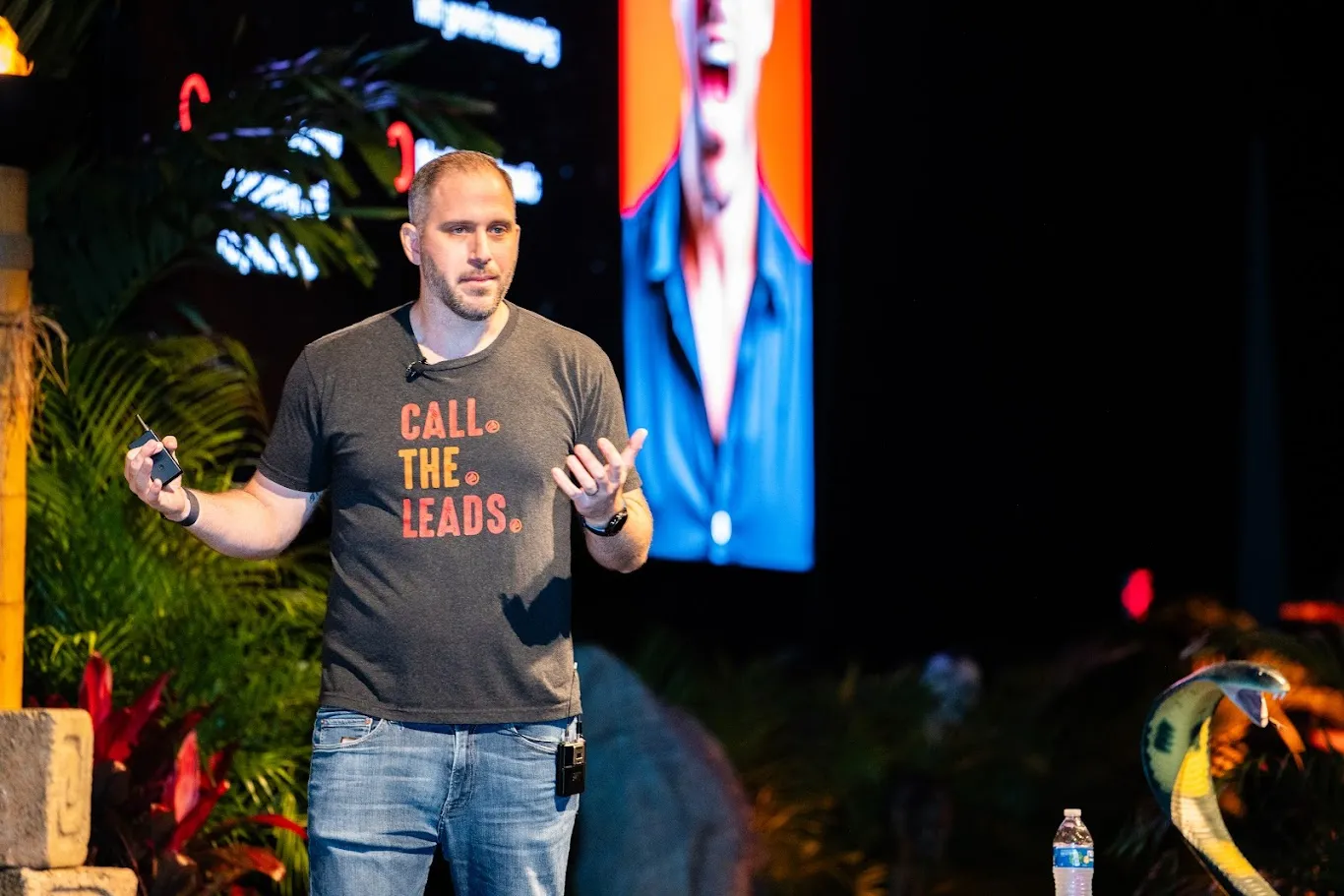
Luke Shankula is a mortgage educator in San Diego and the host of Mortgages Made Simple on YouTube, Instagram and TikTok. He co-founded Cadre Mortgage Group with Rebecca Richardson and Marissa Dropulic. He has held his mortgage license since 2017 (NMLS #1446932). More about Luke